What to Do When Algae Appear in Your Aquarium
Algae are a normal part of aquarium life; here is how to identify the type, fix the real cause, and bring balance back without harsh chemicals.
Don't panic: algae are normal
Almost every aquarium goes through an algae phase, and seeing a green film or brown dust on the glass does not mean you have failed as an aquarist. Algae are simple photosynthetic organisms that grow wherever there is light plus dissolved nutrients. Your tank has both, so a little algae is completely natural. The goal is not to sterilise your aquarium but to tip the balance back in favour of your plants, your fish, and clear water.
Before you buy anything, take a breath and observe. The single most useful thing you can do is identify which algae you have and why it appeared. Treating the cause is far more effective than scrubbing the symptom every week.
Identify the type of algae
Different algae point to different causes, so start with a quick diagnosis.
- Brown algae (diatoms): a dusty brown coating on glass, gravel, and decorations. Extremely common in tanks that are only a few weeks old. It usually fades on its own as the tank matures.
- Green spot algae: small, hard green dots on the glass and on slow-growing leaves. Often linked to strong light and low phosphate.
- Green water: the water itself turns pea-soup green from free-floating algae. Almost always caused by too much light, often direct sunlight.
- Hair or thread algae: long green strands on plants and hardscape. Usually a sign of excess light and nutrient imbalance.
- Black beard algae (BBA): dark grey to black tufts on leaf edges and equipment. Linked to fluctuating CO2 and high organic waste.
Understand the real causes
Algae thrive on three things: light, nutrients, and time. When one of these is out of balance, algae get the upper hand over your plants.
Too much light
This is the number one cause. Most planted tanks only need 6 to 8 hours of light per day. Leaving the light on 10 to 12 hours, or placing the tank where sunlight hits it, feeds algae far more than it feeds your plants. A simple timer solves this instantly.
Excess nutrients
Nitrate and phosphate come from fish waste, decaying plants, and above all overfeeding. Uneaten food rotting in the gravel is a buffet for algae. Feed only what your fish finish in about two minutes, once or twice a day.
A young, uncycled tank
New aquariums have not yet built up the beneficial bacteria that process ammonia and nitrite. This biological cycle takes 3 to 6 weeks, and the diatom (brown algae) bloom during this period is a normal rite of passage. Your target readings once cycled are ammonia 0 mg/L, nitrite 0 mg/L, and nitrate kept below about 20 mg/L.
What to do right now
Here is a practical, beginner-friendly plan that works for most algae outbreaks.
- Reduce the lighting period. Put your light on a timer set to 6 to 8 hours. Move the tank out of direct sunlight if possible.
- Do a water change. Change 20 to 30% of the water weekly using dechlorinated water at the same temperature. This physically removes nutrients and algae spores.
- Cut back on feeding. Reduce portions and consider one fasting day per week. Remove any uneaten food and dead leaves.
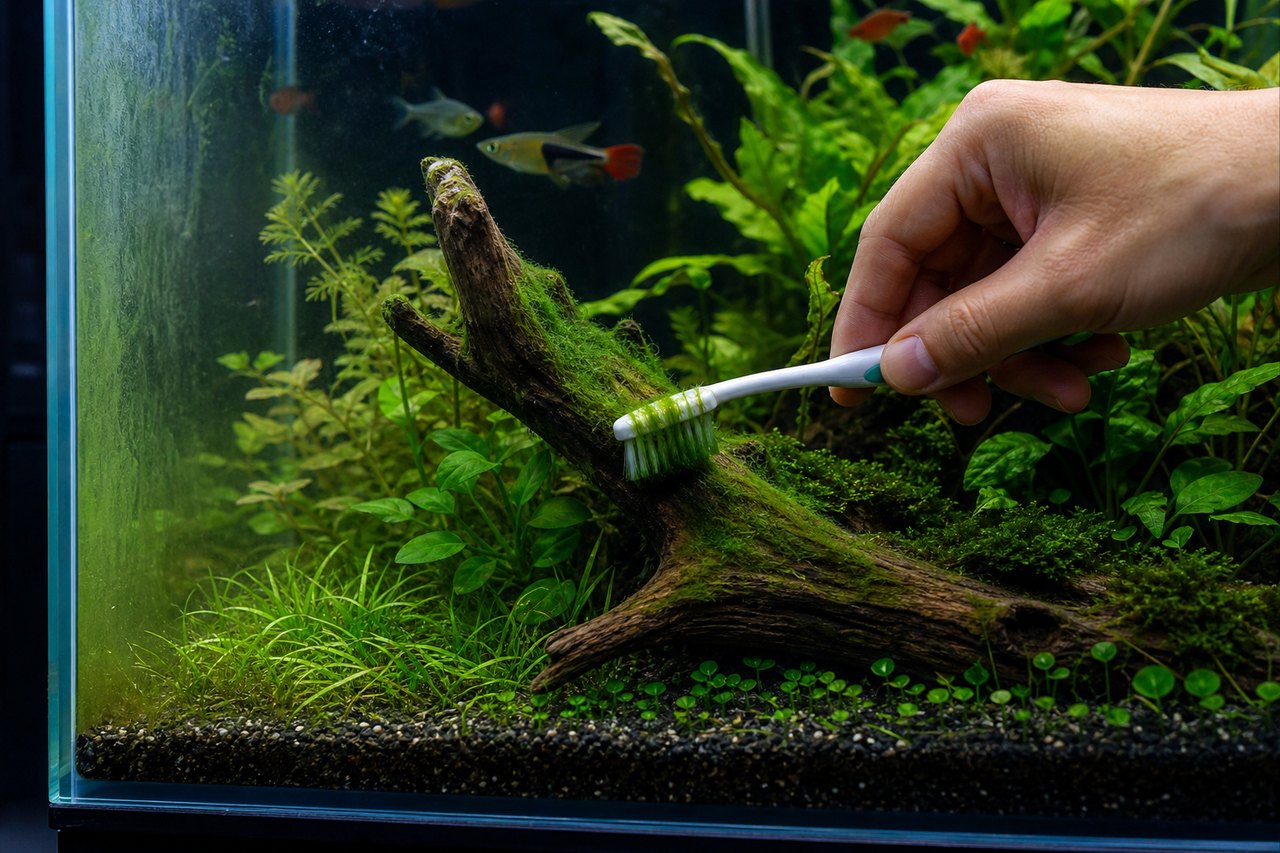
- Clean manually. Wipe the glass with an algae scraper or magnet, and gently brush affected decorations. For hair algae, twirl it onto a toothbrush and pull it out.
- Rinse your filter media in old tank water once a month so it keeps removing waste efficiently. Never rinse it under the tap, as chlorine kills the beneficial bacteria.
Let nature help you
A well-planted tank is your best long-term defence. Fast-growing plants such as hornwort, water sprite, or floating plants absorb the same nutrients algae crave, effectively starving them out. Healthy plants and algae compete for the same resources, so the more your plants thrive, the less room algae have.
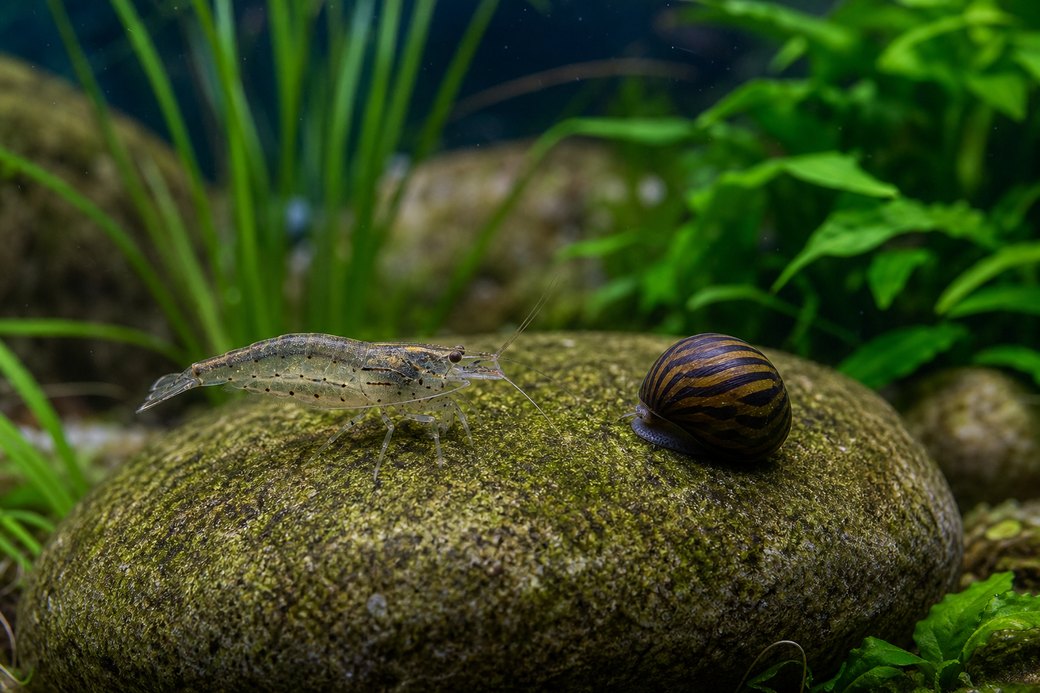
Some animals are enthusiastic algae grazers. Nerite snails are excellent on green spot and diatoms, Amano shrimp tackle hair algae, and Otocinclus catfish (in a mature tank) graze brown algae. Treat these as helpers, not a cure. They cannot fix an underlying light or feeding problem, and you should never overstock the tank just to control algae.
What to avoid
Reach for patience before chemistry. A few common mistakes make things worse:
- Don't leave the light on longer hoping to help plants recover; you only feed the algae.
- Be cautious with algaecides. Chemical algae killers treat the symptom, can harm shrimp, snails, and sensitive plants, and the dead algae decomposing can spike your nutrients and cause another bloom.
- Don't do a giant water change or tear the tank apart. In a young aquarium this disrupts the developing bacteria. Steady, consistent maintenance wins.
- Don't overstock or overfeed to speed anything up. More waste always means more algae.
Prevention: the boring habits that work
Once the outbreak fades, a light routine keeps it from returning. Consistency matters more than any single product.
- Keep lighting to 6 to 8 hours on a timer.
- Change 20 to 30% of water each week and test occasionally so you know your nitrate trend.
- Feed sparingly and remove debris.
- Keep plants growing and prune dead leaves promptly.
Most algae problems disappear within a few weeks once light, nutrients, and maintenance are back in balance. Green spot and hair algae take a little longer, but the same fundamentals apply.
Because beating algae is really about repeating small tasks on schedule, it helps to have reminders for your weekly water change, feeding, and light timer checks. An app like AquaTender lets you plan and track these routines so your tank stays balanced without you having to remember everything.
The takeaway
Algae are a message, not a disaster. Identify the type, shorten your lighting, feed less, change water regularly, and lean on live plants and a few grazers. Fix the cause rather than fighting the symptom, stay consistent for a few weeks, and your aquarium will settle into the clear, healthy balance you are aiming for.