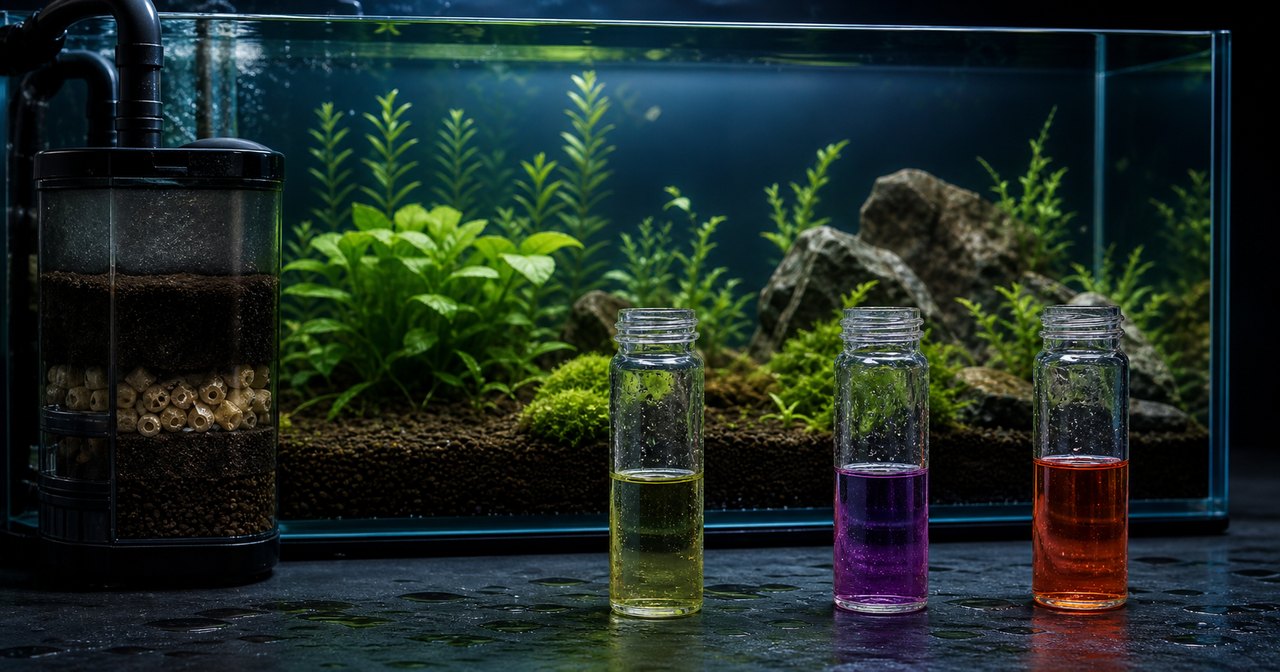
The Nitrogen Cycle and the Nitrite Spike: How to Cycle a New Aquarium
Learn how the nitrogen cycle turns toxic fish waste into harmless nitrate, why the nitrite spike happens, and how to cycle a new tank safely.
Why a new tank is not ready for fish
A freshly filled aquarium looks clean, but it is biologically empty. It has no colony of beneficial bacteria to process the waste your fish produce. Add fish too soon and their own waste quickly poisons them. The process of growing that bacterial colony is called cycling, and it usually takes 3 to 6 weeks. Understanding what happens during this time is the single most useful thing a beginner can learn.
The nitrogen cycle in plain terms
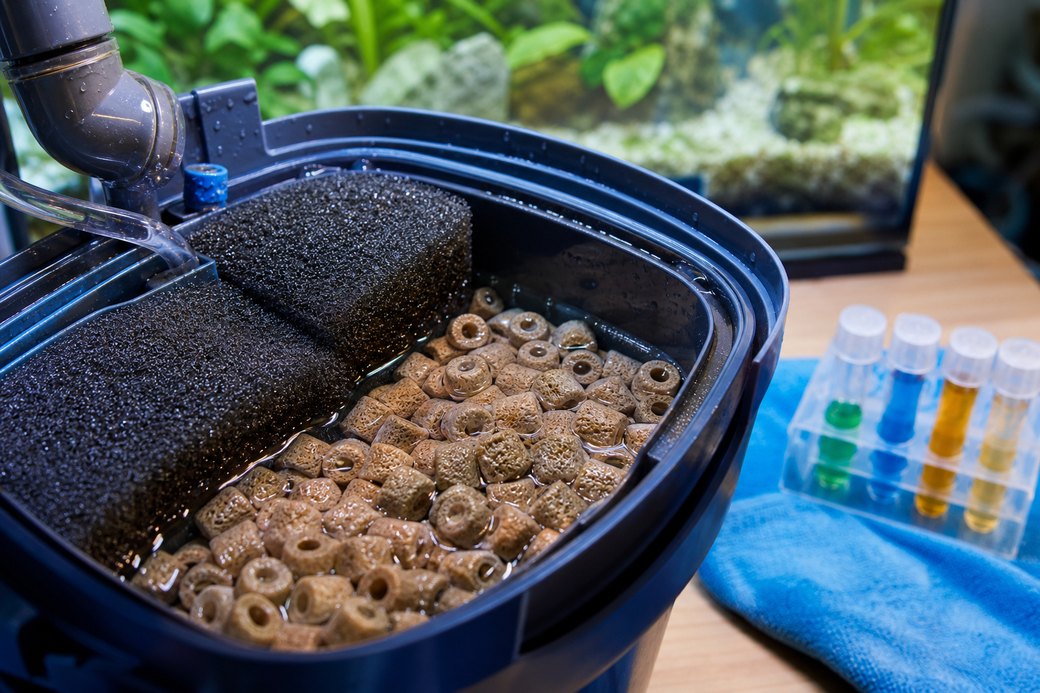
Fish constantly release waste, mostly through their gills and droppings. Uneaten food and decaying plant matter add more. All of this breaks down into ammonia, which is highly toxic. In a healthy aquarium, two groups of bacteria convert this waste in a chain:
- Ammonia (NH₃/NH₄⁺) — produced by fish and decay. Toxic even at low levels; the target in a running tank is 0 mg/L.
- Nitrite (NO₂⁻) — the first group of bacteria (Nitrosomonas) turns ammonia into nitrite. Still very toxic; target is also 0 mg/L.
- Nitrate (NO₃⁻) — a second group (Nitrobacter and relatives) turns nitrite into nitrate, which is far less harmful. You remove it with water changes.
So the full path is: waste → ammonia → nitrite → nitrate. A tank is "cycled" when both bacterial groups are established and can process a full day's waste, keeping ammonia and nitrite at zero.
What the nitrite spike is
During cycling you will see a very predictable pattern if you test the water. First, ammonia rises for the first one to two weeks. Then the Nitrosomonas bacteria catch up, ammonia starts to fall, and nitrite climbs sharply. This is the famous nitrite spike. It happens because the bacteria that eat nitrite are slower to grow than the ones that produce it, so nitrite piles up before its consumers arrive.
The spike typically peaks somewhere around weeks 2 to 4. Once the second group of bacteria is strong enough, nitrite drops to zero and nitrate begins to appear. When you can read 0 ammonia, 0 nitrite, and some nitrate consistently, your cycle is complete.
Fishless cycling: the kind, reliable method
The safest approach is to cycle without fish, feeding the bacteria an ammonia source yourself:
- Set up the tank fully — filter running, heater at your target temperature (warmer water, around 25–27 °C, speeds bacteria growth).
- Add an ammonia source: a few drops of pure household ammonia dosed to about 2–4 mg/L, or a small pinch of fish food left to rot.
- Test every 2–3 days for ammonia and nitrite. Re-dose ammonia when it drops, to keep feeding the colony.
- Wait until adding ammonia is processed to zero ammonia and zero nitrite within 24 hours. That is your green light.
This can take 4 to 6 weeks but harms no animals and builds a robust colony.
Fish-in cycling: only if you must
If fish are already in the tank, you must protect them actively. Stock very lightly, feed sparingly, and test daily. Whenever ammonia or nitrite rises above roughly 0.25 mg/L, do a 20–50% water change immediately to dilute it. This is more stressful for the fish and more work for you, which is why fishless cycling is preferred.
How to speed things up
- Seed the filter with mature media, gravel, or a sponge from an established, healthy tank. This is the single biggest accelerator and can cut cycling time in half.
- Use a bottled bacteria starter — results vary by brand, but a good one gives the colony a head start.
- Keep the water warm and well-oxygenated. These bacteria breathe oxygen and multiply faster in warm water.
- Do not over-clean. Never rinse filter media under hot or chlorinated tap water; you will kill the colony you are growing.
After the cycle: keeping it stable
Once cycled, your job shifts to maintenance. Add fish gradually, a few at a time, so the bacteria can grow to match the extra waste. Change 20–30% of the water weekly to keep nitrate low; long-term nitrate above about 40 mg/L stresses most fish. Feed only what your fish eat in a couple of minutes, since excess food becomes ammonia.
A quick liquid test kit is worth the small cost. It lets you watch the cycle unfold and confirm ammonia and nitrite stay at zero. If either ever reappears — after adding new fish, a filter mishap, or overfeeding — a water change buys time while the bacteria recover.
Cycling asks for patience more than skill, and it is easy to lose track of test readings and water-change dates over several weeks. Logging your ammonia, nitrite and nitrate values with a tool like AquaTender makes the pattern obvious and reminds you when the next test or maintenance step is due.
The takeaway
The nitrogen cycle is the invisible engine of every healthy aquarium. Expect ammonia first, then a nitrite spike, then nitrate. Give it 3 to 6 weeks, cycle without fish when you can, test the water, and only stock once ammonia and nitrite both sit reliably at zero. Do that, and you avoid the single most common cause of new-tank fish loss.