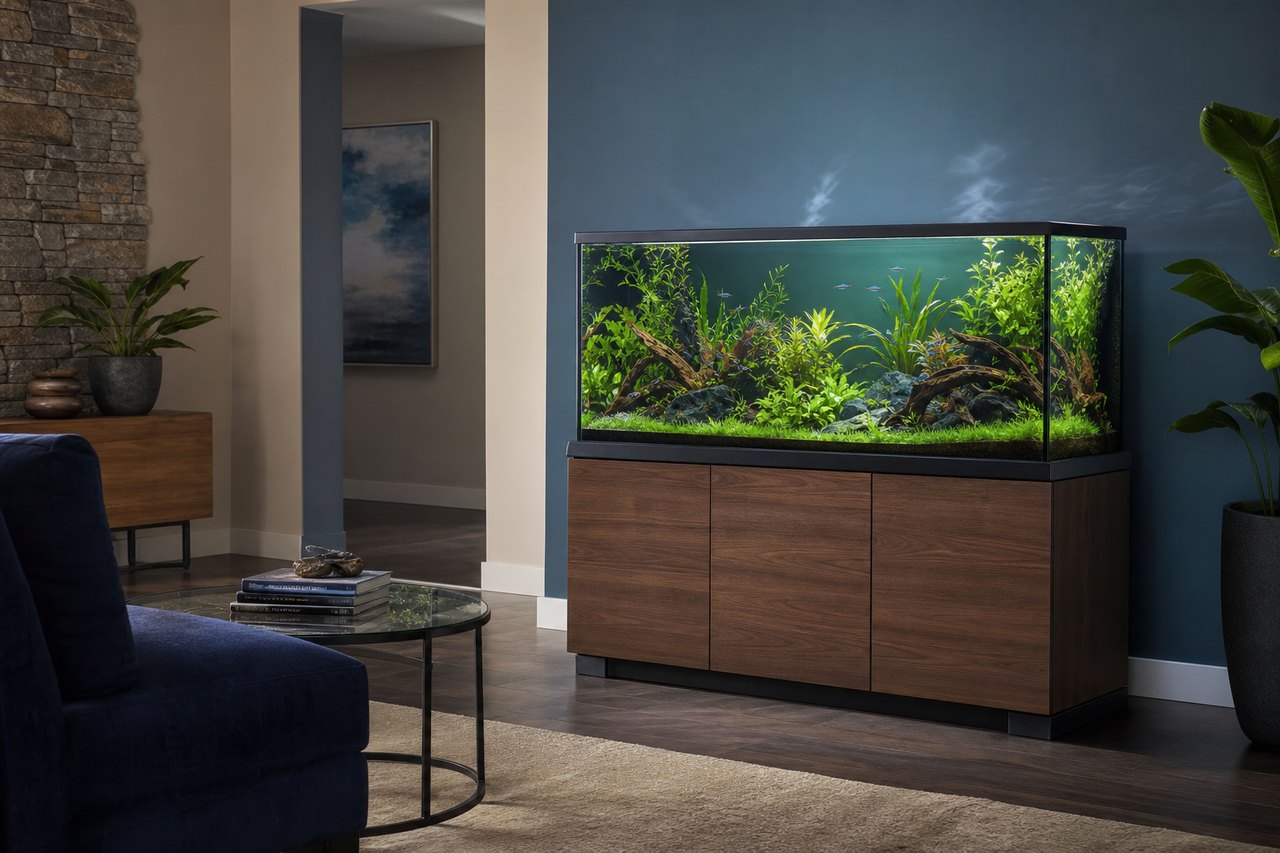
Choosing the Right Aquarium Size and Location
A practical beginner's guide to picking the right aquarium size and the safest, most stable spot for it in your home.
Why Size and Location Matter More Than You Think
Two decisions shape your entire fishkeeping experience before you ever add a fish: how big your aquarium is and where you put it. Get these right and everything else becomes easier. Get them wrong and you will fight unstable water, algae, and stressed fish for months. This guide walks you through both choices in plain language, with concrete numbers you can actually use.
Bigger Is Usually Easier for Beginners
It sounds backwards, but a larger tank is more forgiving than a small one. A bigger volume of water dilutes waste, resists sudden temperature swings, and keeps its chemistry stable. In a tiny 10-litre bowl, a single missed water change or a dead snail can spike ammonia to dangerous levels in a day. In a 100-litre tank, the same mistake barely moves the needle.
For a first aquarium, aim for at least 60 to 100 litres (roughly 15 to 25 US gallons). This range is large enough to stay stable, small enough to fit a normal room, and suits a peaceful community of small fish. Avoid the tempting nano bowls and tanks under 20 litres as a starter, they demand more skill, not less.
Matching Size to Your Fish
Different fish need different room. A common shortcut is roughly 1 cm of adult fish length per litre of water, but treat this as a loose ceiling, not a target. Active swimmers, schooling species, and anything that grows large need far more space than the rule suggests. Research the adult size of every fish before buying, a 2 cm juvenile can become a 12 cm adult. Always plan for the fish you will have in a year, not the one in the bag today.
Consider the Full Weight
Water is heavy. One litre weighs about 1 kilogram, so a filled 100-litre aquarium plus glass, gravel, and rock easily reaches 120 to 150 kg. That is a lot of load concentrated on a small footprint. Your aquarium must sit on furniture designed for it, ideally a proper aquarium stand or a very sturdy cabinet, never a flimsy shelf or an old desk. Check that your floor can handle the weight too, especially on upper storeys.
Choosing the Right Location
Once you know the size, finding the right spot is about avoiding a short list of common problems.
Keep It Away From Direct Sunlight
A window may look like a bright, cheerful place for a tank, but direct sun fuels algae and causes temperature swings as the room heats and cools. Aim for a spot that gets ambient daylight but no direct beams. You will control lighting with a timer instead, typically 6 to 8 hours per day.
Avoid Temperature Extremes
Most tropical fish want stable water around 24 to 26 °C. Keep the tank away from radiators, heating vents, air conditioners, and drafty doorways. Rapid temperature changes stress fish far more than a steady temperature slightly outside the ideal range.
Think About Access and Noise
You will feed, observe, and maintain this tank often, so put it where you will actually see it and reach it comfortably. Leave room above the tank to open the lid and space behind it for the filter and cables. Bedrooms can work, but remember that filters and air pumps hum quietly around the clock.
Stay Near Power and Water
You need at least one reliable power outlet nearby for the filter, heater, and light. A location within easy reach of a sink or tap makes weekly water changes far less of a chore, hauling buckets across the house gets old fast.
Set It Up on a Level, Solid Surface
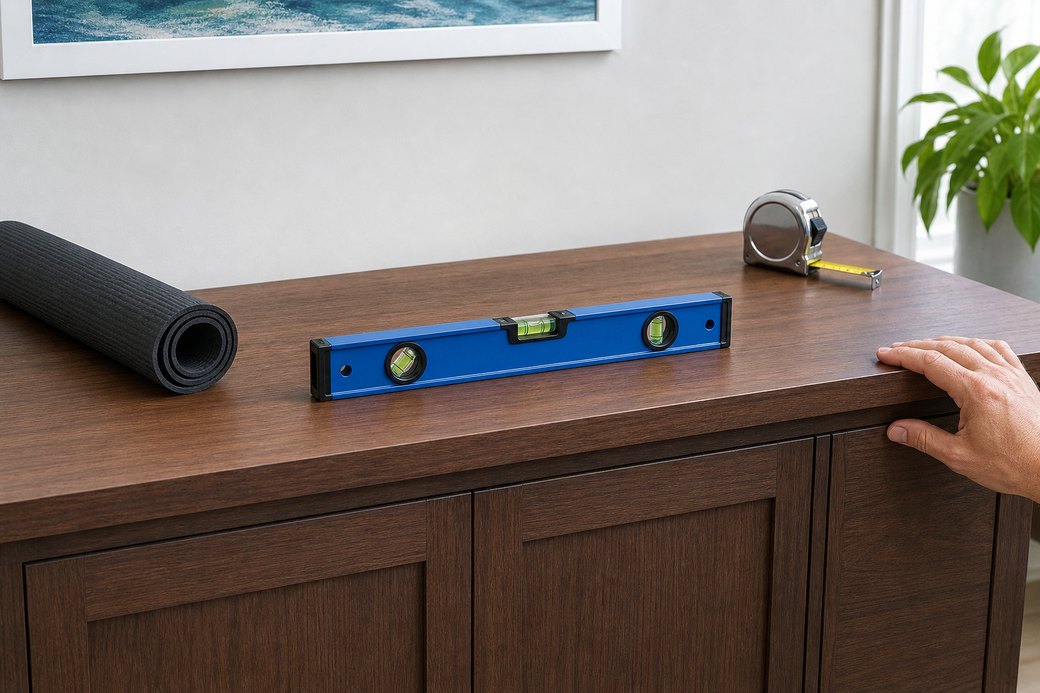
Before filling, confirm the stand is perfectly level with a spirit level. An uneven base puts twisting stress on the glass and can, over time, cause seams to fail. Many keepers place a thin foam or polystyrene mat between the tank and the stand to cushion small imperfections. Push the whole setup against a wall for stability and to hide equipment.
Plan for Cycling Before You Buy Fish
The single most important habit for beginners is patience. A new aquarium cannot safely hold fish until it has grown a colony of beneficial bacteria that convert toxic waste, a process called the nitrogen cycle. This takes 3 to 6 weeks. During cycling, ammonia rises and falls, then nitrite rises and falls, and finally you are left with much less harmful nitrate.
Use a liquid test kit and wait until both ammonia and nitrite read a steady 0 mg/L before adding fish. Adding livestock too early is the number one cause of early fish deaths. A larger tank gives your bacteria more surface area to colonise and makes this whole process more forgiving.
Ongoing Maintenance Depends on Size
Your chosen size also sets your routine. Plan to change 20 to 30 percent of the water every week to keep nitrate low and replenish minerals. Larger tanks mean larger volumes to change, but they also drift more slowly, so they tolerate the occasional busy week. Keep nitrate under about 40 mg/L, and lower still for sensitive species.
A Simple Checklist Before You Commit
- Is the tank at least 60 litres for a first setup?
- Can the furniture and floor hold 120 kg or more safely?
- Is the spot free of direct sunlight and temperature extremes?
- Is it near a power outlet and easy to reach with water?
- Is the surface level and solid?
- Have you budgeted 3 to 6 weeks to cycle before adding fish?
Tracking water changes, cycling progress, and test results is easy to forget in the first weeks. A tool like AquaTender can help you log parameters and schedule maintenance so your new tank stays stable while good habits take root.
The Takeaway
Choose the largest tank you can comfortably fit and afford, aiming for at least 60 to 100 litres. Place it on solid, level furniture, away from sun, drafts, and heat sources, and within reach of power and water. Then give it the time it needs to cycle. Nail these fundamentals and you set yourself up for years of healthy, low-stress fishkeeping.