Common Fish Diseases and How to Prevent Them
A beginner-friendly guide to the most common aquarium fish diseases, how to spot them early, and the simple habits that prevent most of them.
Why fish get sick in the first place
Most aquarium diseases are not bad luck. They are the visible result of stress, and stress almost always traces back to water quality, temperature swings, or newly introduced fish. Healthy fish carry small numbers of parasites and bacteria all the time. Their immune systems keep these in check until something weakens them. Understanding this single idea changes how you keep fish: you spend far more time managing water than treating illness.
The good news for beginners is that prevention is mostly about routine, not expertise. If you get a handful of habits right, you will likely avoid the majority of the diseases below.
The foundation: water and cycling
Before adding fish, a new tank needs to be cycled. Cycling grows beneficial bacteria that convert toxic ammonia (from fish waste) into nitrite, then into far less harmful nitrate. This process takes roughly 3 to 6 weeks. Skipping it causes "new tank syndrome," where ammonia and nitrite burn gills and trigger disease.
Your targets with a liquid test kit are simple: ammonia 0 mg/L, nitrite 0 mg/L, and nitrate below 20 to 40 mg/L. Keep nitrate down with a 20 to 30 percent water change every week. Always match the temperature of new water and use a dechlorinator, because chlorine and chloramine damage gills and kill your beneficial bacteria.
Ich (white spot disease)
Ich is the disease nearly every aquarist meets eventually. It is caused by a parasite, Ichthyophthirius multifiliis, and shows up as tiny white grains, like sprinkled salt, on the fins and body. Fish often flick or "flash" against decorations and clamp their fins.
Ich has a life cycle that only becomes vulnerable to treatment when the parasite leaves the fish, so treatment must continue for several days after spots disappear. Raising the temperature gradually to around 28 to 30 °C (for species that tolerate it) speeds the cycle, and aquarium salt or a proper anti-ich medication clears it. Because ich thrives on stress, it frequently appears right after new fish arrive or after a temperature drop.
Fin rot
Fin rot is a bacterial infection, usually secondary to poor water or an injury. Fins look ragged, split, or edged with white or red, and in advanced cases the damage creeps toward the body. Caught early, fin rot often reverses with nothing more than clean water: test your parameters, do a water change, and remove any sharp decor or aggressive tankmates nipping fins. Persistent cases need an antibacterial medication. Betta fish are especially prone because their long fins tear easily.
Fungal infections
True fungus appears as fluffy, cottony white or grey tufts, often on wounds or on already-weakened fish. It rarely attacks healthy tissue first, so it is usually a sign that something else went wrong, such as an injury or a spike in ammonia. Improve water quality, isolate the fish if possible, and treat with an antifungal remedy. Removing uneaten food and dead plant matter prevents the organic buildup fungus loves.
Dropsy and swim bladder problems
Dropsy is not one disease but a symptom: the fish swells, and its scales stick out like a pinecone. It usually points to internal bacterial infection or organ failure and is often difficult to reverse, which is why prevention through clean water matters so much.
Swim bladder disorder shows as a fish that floats, sinks, or swims sideways. In many cases it is linked to constipation or overfeeding, especially in round-bodied fish like fancy goldfish and bettas. Feeding a little less, offering a fasting day, and including fibre such as a blanched, deshelled pea often helps.
Velvet and other parasites
Velvet gives fish a fine gold or rust-coloured dust, best seen under a flashlight, along with rapid breathing and clamped fins. It is more dangerous than ich and needs prompt treatment. Other external parasites, such as flukes and anchor worms, cause flashing, redness, or visible attachments and usually require targeted medication.
The habits that prevent most disease
Nearly everything above is easier to prevent than to cure. A few disciplines do most of the work:
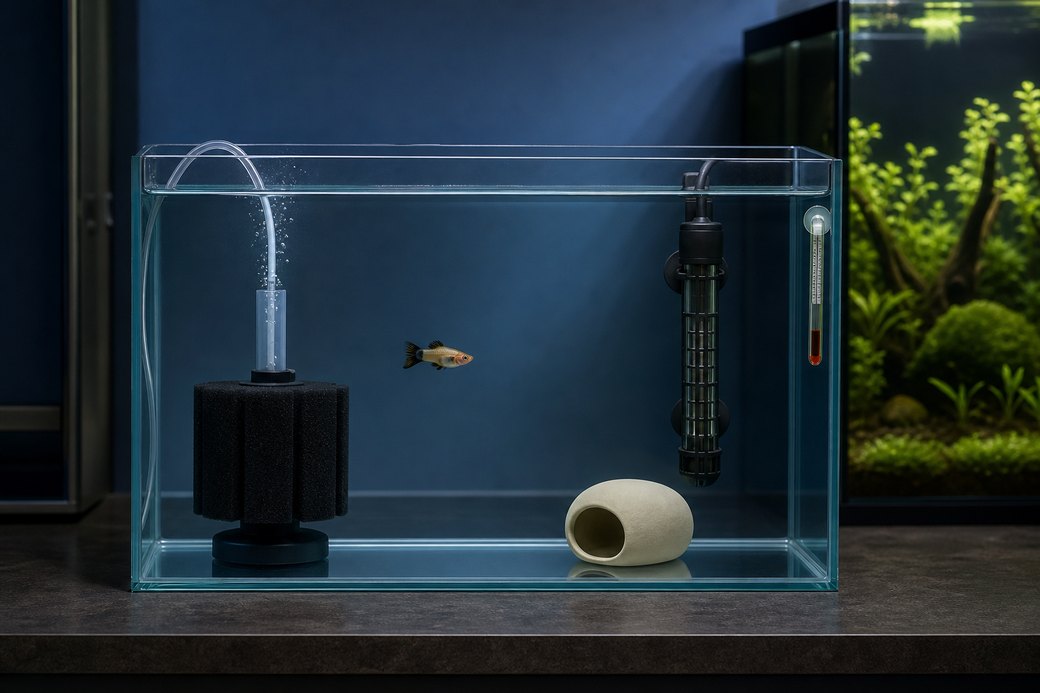
- Quarantine new fish for 2 to 4 weeks in a separate tank before adding them. This single step stops most disease outbreaks, because problems arrive on new arrivals.
- Test your water weekly and act on the numbers, rather than waiting for sick fish.
- Do not overstock or overfeed. Feed only what fish finish in about two minutes, once or twice a day. Excess food rots and drives ammonia up.
- Keep temperature stable. Sudden swings suppress the immune system. Use a reliable heater and thermometer.
- Match fish to your water and to each other. Peaceful species mixed with fin-nippers means constant stress and injuries.
- Clean gently. Rinse filter media in old tank water, never under the tap, to protect your beneficial bacteria.
What to do when a fish looks ill
Stay calm and observe before medicating. Note the exact symptoms, check whether one fish or many are affected, and test your water immediately, since bad parameters mimic or trigger many diseases. If you medicate, remove chemical filtration such as activated carbon, which absorbs the treatment, and follow the full course rather than stopping when symptoms fade. A dedicated hospital or quarantine tank lets you treat one fish without dosing your whole display, and keeps sensitive plants and invertebrates safe.
Keeping a simple log of feedings, water changes, test results, and any symptoms makes patterns obvious and helps you catch trouble a week before it becomes a crisis. If you would like that record and your weekly reminders in one place, the AquaTender app can quietly track your maintenance schedule and water parameters so nothing slips.
Fishkeeping rewards consistency far more than heroics. Master the boring routine of stable water, sensible feeding, and quarantine, and disease becomes the rare exception rather than a recurring worry.