Aquarium Plants for Beginners: A Practical Starter Guide
A practical, no-jargon guide to choosing, planting, and caring for your first easy aquarium plants so they actually thrive.
Why live plants make aquarium life easier
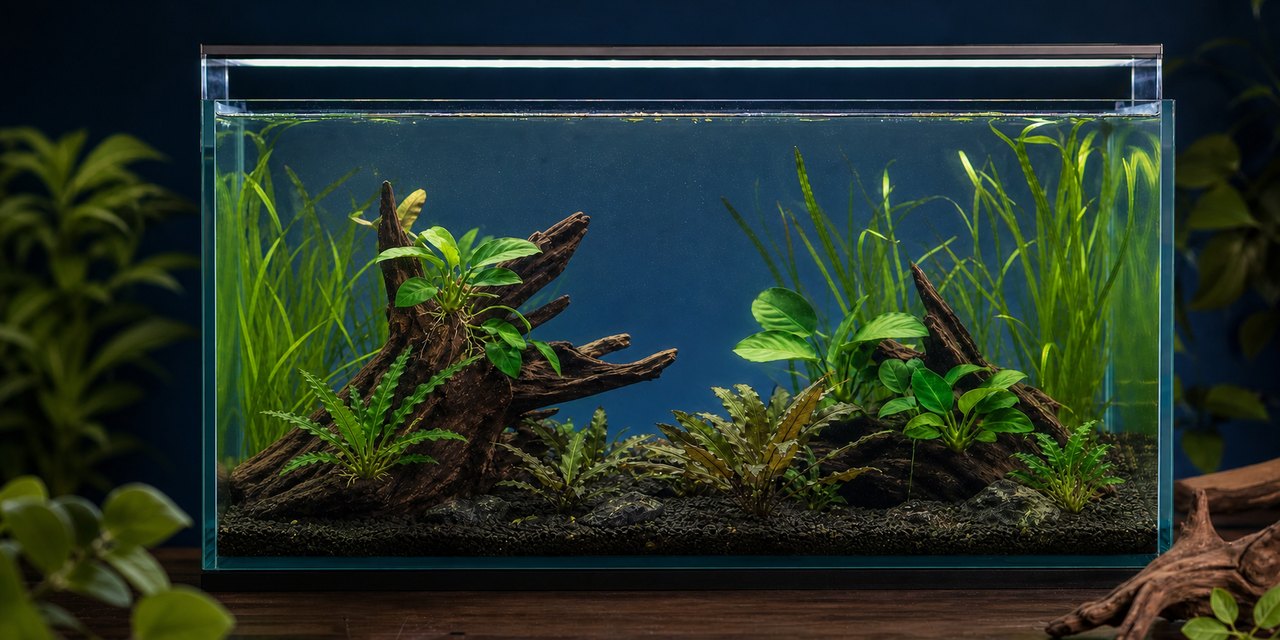
Many beginners assume live plants add difficulty, but the opposite is often true. Plants compete with algae for nutrients, absorb some of the ammonia and nitrate that fish produce, oxygenate the water during the day, and give fish and shrimp places to shelter. A modestly planted tank is usually more stable and easier to keep balanced than a bare one.
You do not need pressurised CO2, expensive lighting, or a chemistry degree to start. A handful of hardy species, a sensible light, and steady weekly care will get you a green, healthy tank within a couple of months.
Understand the nitrogen cycle first
Before adding fish or delicate plants, your filter needs to grow the bacteria that process fish waste. This "cycling" process typically takes 3 to 6 weeks. During it, ammonia converts to nitrite, then nitrite converts to nitrate. Your targets in a mature tank are simple: ammonia at 0 mg/L, nitrite at 0 mg/L, and nitrate kept low, ideally under 20 to 40 mg/L.
Hardy plants can go in early and actually help by consuming ammonia directly. Fish should only be added once ammonia and nitrite both read 0 mg/L for several consecutive days. A basic liquid test kit is worth buying so you are measuring, not guessing.
The easiest beginner plants
Stick to species that tolerate low light and forgive mistakes. These are the classics for good reason:
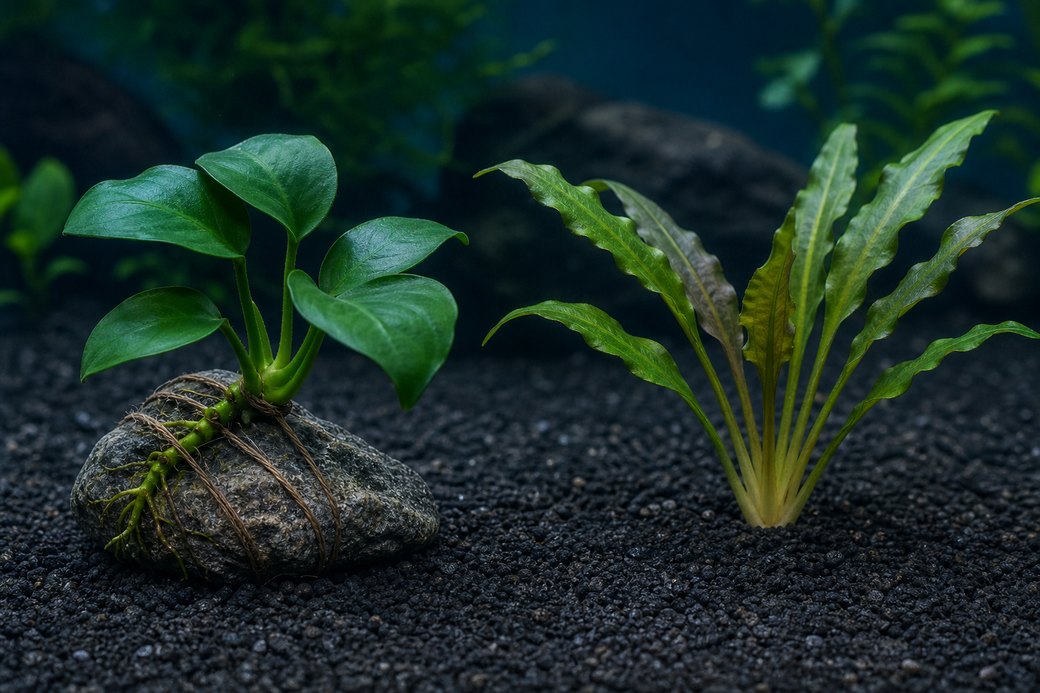
- Java fern — attach it to rock or wood, never bury the rhizome, and it grows slowly with almost no demands.
- Anubias — another rhizome plant tied to hardscape; tough, dark green, and shrimp-friendly.
- Java moss — a forgiving moss for carpets and textures that needs no substrate at all.
- Cryptocoryne (crypts) — rooted plants that may "melt" after planting but regrow from the roots within a few weeks.
- Vallisneria and Amazon sword — larger background rooted plants for taller tanks.
- Floating plants such as duckweed or frogbit — fast growers that shade the tank and soak up excess nutrients.
A useful rule: plants with a rhizome (Java fern, Anubias) must sit above the substrate, while rooted plants (crypts, swords, vallis) go into the substrate with only the roots buried, leaving the crown exposed.
Light, substrate, and nutrients
Light is the engine of plant growth. For easy species, a modest LED aquarium light running 6 to 8 hours a day on a timer is plenty. Longer or brighter lighting mainly feeds algae, so resist the urge to leave lights on all day. Consistency matters more than intensity.
For substrate, plain aquarium gravel or sand works fine for rhizome and floating plants. If you want lush rooted growth, a dedicated planted-tank soil gives roots the nutrients they crave. Rooted plants like crypts and swords also benefit from root tabs pushed into the substrate every few months.
Once the tank has plants and fish, a general liquid fertiliser dosed weekly covers the nutrients they draw from the water column. Start with the lowest recommended dose; too many nutrients with too little light simply fuels algae.
Planting them properly
Rinse new plants gently and remove any rockwool or plastic pots. Trim damaged leaves. For rhizome plants, tie or glue them to wood or rock with cotton thread or cyanoacrylate gel until they anchor themselves, which usually takes a few weeks. For rooted plants, use tweezers or your fingers to set the roots into the substrate at a slight angle so they hold.
Expect an adjustment period. Many plants shed old submerged-grown or emersed-grown leaves and look poor for the first two to three weeks. This "melt" is normal; keep conditions stable and new growth will follow.
A simple weekly routine
Plant care is mostly about consistency, not effort. A realistic beginner routine looks like this:
- Change 20 to 30% of the water weekly, using dechlorinated water at a similar temperature.
- Dose your liquid fertiliser right after the water change.
- Wipe the front glass and gently remove any dying leaves.
- Check that the light timer is running 6 to 8 hours.
- Test water occasionally to confirm ammonia and nitrite stay at 0 mg/L and nitrate stays reasonable.
Trim fast growers before they shade everything below them, and thin floating plants so they never cover the whole surface, which fish need for gas exchange.
Dealing with algae
Some algae is normal, especially in a new tank. It is almost always a sign of imbalance: too much light, too many nutrients, or too few healthy plants. Rather than reaching for chemicals, shorten the lighting period, do your water changes reliably, and add more fast-growing or floating plants to outcompete it. A few algae-eating snails or shrimp help too. Patience solves most early algae problems within a few weeks.
Common beginner mistakes to avoid
- Burying the rhizome of Java fern or Anubias, which causes it to rot.
- Running lights 10 to 12 hours a day, which invites algae.
- Adding fish before the tank has finished cycling.
- Giving up during the normal early "melt" instead of waiting for new growth.
- Overcrowding a new tank with demanding, high-light species.
Keeping track of it all
The single biggest factor in success is doing small things regularly: water changes, dosing, and testing. If remembering the schedule is your weak point, a planning app can help. You can use AquaTender to set reminders for water changes, log your test results over time, and track when each plant was added, so your routine runs itself instead of relying on memory.
The takeaway
Start with a few hardy plants, modest lighting on a timer, a properly cycled tank, and a steady weekly routine. Accept a slow start and let the plants settle in. Within two to three months you will have a greener, more stable aquarium that is genuinely easier to maintain than a bare tank, and a solid base to grow more adventurous later.