How to Acclimate New Fish Safely
A calm, step-by-step guide to acclimating new fish so they survive the move from the store bag to your aquarium without deadly shock.
Why Acclimation Matters
Bringing a new fish home is exciting, but the trip from the store to your tank is one of the most dangerous moments of its life. Inside the transport bag, the water temperature, pH, and salinity slowly drift away from what the shop maintained. If you simply tip the fish straight into your aquarium, it faces a sudden change on all of these fronts at once. That shock can stress the fish badly, weaken its immune system, or kill it within hours or days.
Acclimation is the process of letting the fish adjust gradually to your tank's specific conditions. Done patiently, it turns a risky transfer into a smooth one. The whole procedure usually takes between 30 minutes and 1 hour, and it costs you nothing but a little time.
Before You Buy: The Tank Must Be Ready
The safest acclimation starts long before the fish is in the bag. Your aquarium should already be fully cycled, meaning it has grown enough beneficial bacteria to convert toxic ammonia into nitrite and then into much safer nitrate. Cycling a new tank typically takes 3 to 6 weeks. You cannot rush it.
Test your water on the day you plan to add fish. Aim for these targets:
- Ammonia: 0 mg/L
- Nitrite: 0 mg/L
- Nitrate: below 20-40 mg/L
- Temperature: matched to the species (commonly 24-26 °C for tropical community fish)
If ammonia or nitrite are above zero, do not add fish yet. Adding livestock to an uncycled tank is the single most common beginner mistake. Also confirm the new fish is compatible with your existing residents in temperature, pH range, size, and temperament.
Step One: Match the Temperature (Floating)
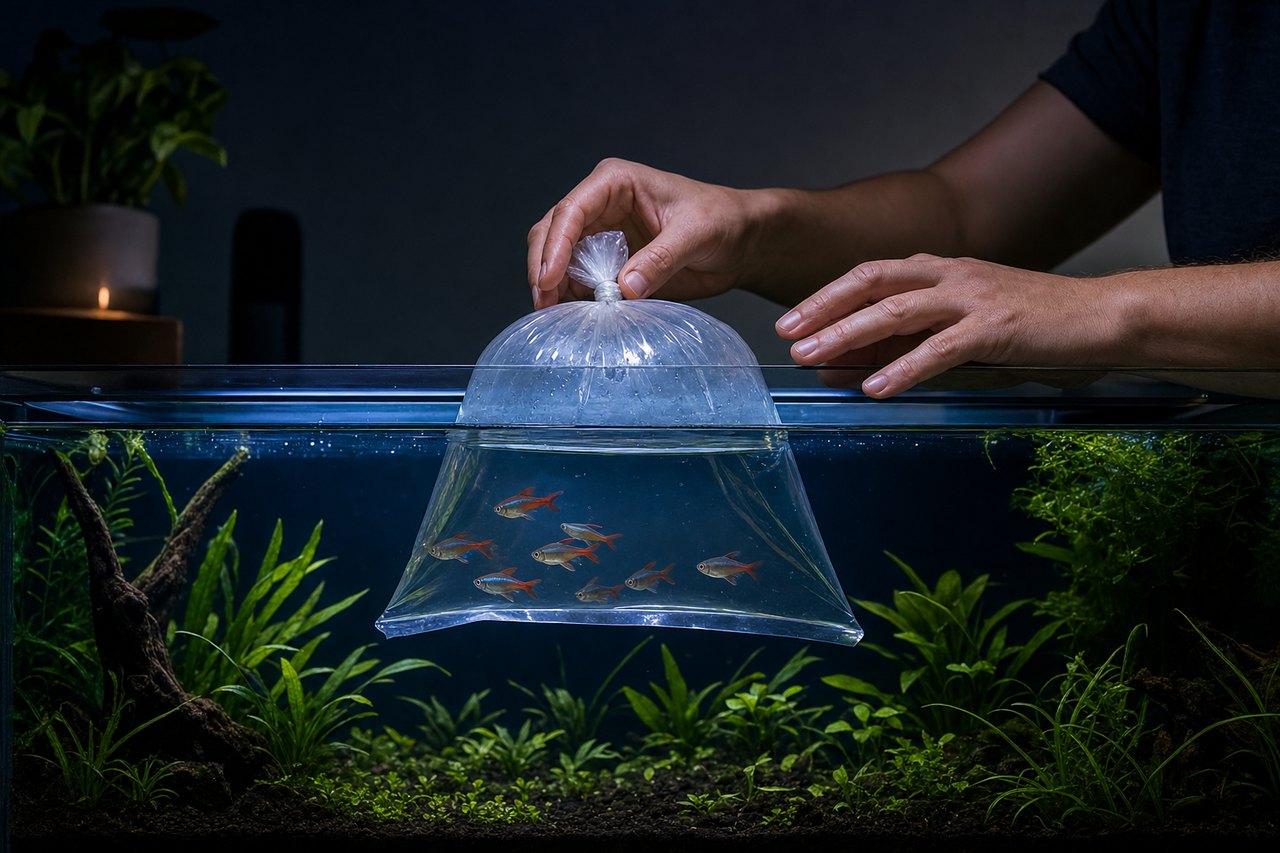
When you get home, dim the aquarium lights and keep the room calm. Bright light and noise add stress. Leave the fish inside its sealed, unopened bag and float it on the surface of your aquarium for about 15 to 20 minutes. This lets the water inside the bag slowly reach the same temperature as your tank without mixing yet. A difference of just a few degrees can shock a fish, so this simple float is the most important single step.
Step Two: Equalize the Water Chemistry (Drip or Add)
Temperature is only half the story. The pH, hardness, and dissolved minerals in the bag may differ from your tank, so you now mix the two waters gradually. There are two reliable methods.
The Simple Add Method
Open the bag and pour the fish and its water into a clean container or bucket (never one that has touched soap). Every 5 minutes, add about half a cup of your aquarium water to the container. Repeat for roughly 20 to 30 minutes, until the volume has at least doubled. This steadily dilutes the old water with new.
The Drip Method (Best for Sensitive Species)
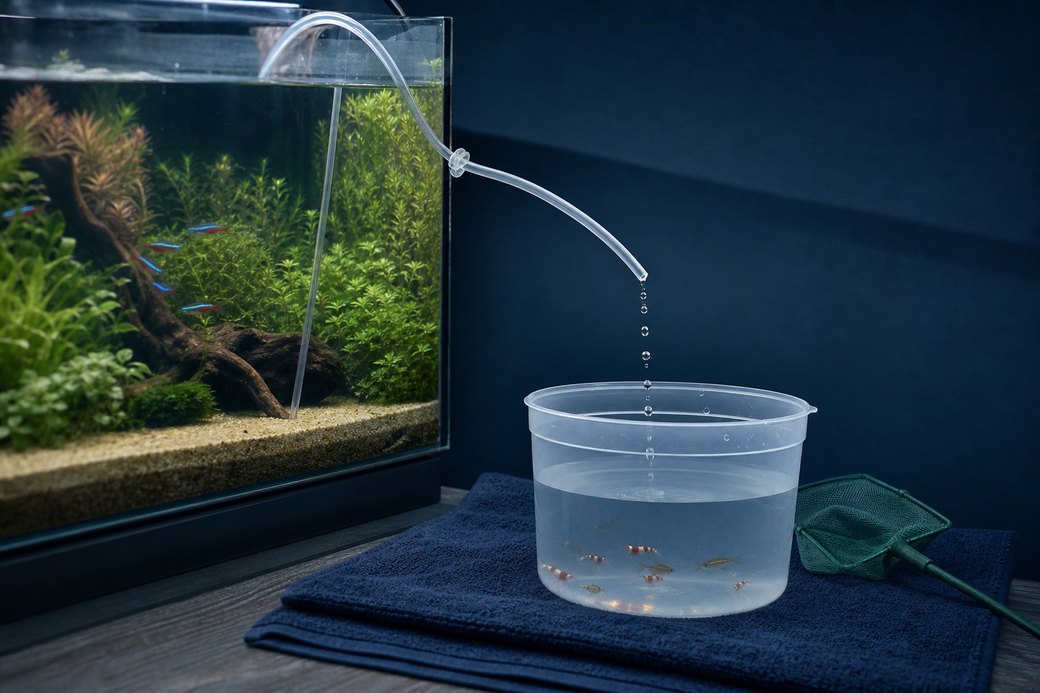
For shrimp, marine fish, or delicate species, use a length of airline tubing to siphon tank water into the container one drop at a time. Tie a loose knot in the tube or use a valve to slow the flow to 2 to 4 drips per second. Continue for 30 to 45 minutes until the water volume has doubled or tripled. The extra gentleness is worth it for animals that react strongly to change.
Step Three: Move the Fish, Not the Bag Water
Once acclimation is complete, net the fish gently and place it into the aquarium. Do not pour the bag or container water into your tank. That water can carry ammonia that built up during transport, along with parasites, medications, or diseases from the store system. Discarding it protects your established tank.
Use a soft net and support the fish with a cupped hand if needed. Lower the net just under the surface and let the fish swim out on its own rather than dropping it from a height.
The First 24 Hours and Beyond
Leave the aquarium lights off for a few hours so the newcomer can settle and explore. Do not feed on the first day. A short fast lets the fish calm down and reduces the ammonia load while its digestion recovers. Watch quietly for signs of trouble: clamped fins, gasping at the surface, hiding excessively, or being bullied by tank mates.
Over the following two weeks, keep monitoring your water. Adding new fish increases the bioload, so test ammonia and nitrite every couple of days and be ready to do a partial water change of 20-30% if either rises above zero. In a mature tank, routine weekly water changes of 20-30% keep nitrate in check going forward.
Quarantine: The Habit That Saves Tanks
Experienced keepers use a separate quarantine tank for every new arrival. Keeping the fish in a small, bare quarantine tank for 2 to 4 weeks lets you spot illness before it spreads to your main community. It is the best insurance against introducing disease, and even a simple 40-litre setup with a heater and sponge filter does the job. If you skip quarantine, observe the new fish especially closely for the first month.
Common Mistakes to Avoid
- Rushing: Dumping the fish straight in causes thermal and pH shock.
- Pouring bag water in: It risks importing ammonia, parasites, and disease.
- Feeding immediately: It adds waste when the tank is least able to cope.
- Skipping the cycle: An uncycled tank poisons fish with ammonia and nitrite.
- Adding too many at once: A sudden bioload spike can overwhelm the bacteria.
Acclimation involves several timed steps and follow-up water tests, which are easy to forget in the excitement. A planning tool like AquaTender can help you set reminders for each stage and log your water parameters over those first crucial weeks, so nothing slips through the cracks.
Patience Pays Off
Acclimating fish safely is not complicated, but it rewards a slow, gentle hand. Float to match temperature, mix the water gradually, net the fish in without the old water, and hold off on feeding. Give the newcomer a quiet first day and keep testing your water. Follow these steps and your new fish will settle in healthy, confident, and ready to thrive for years to come.