Water Changes and a Simple Aquarium Maintenance Routine
Learn why regular partial water changes keep fish healthy, and follow a simple weekly and monthly maintenance routine any beginner can stick to.
Why Water Changes Matter
An aquarium is a small, closed world. In nature, rivers and lakes are constantly refreshed by rain and current, so waste never builds up. In a glass box, nothing leaves unless you remove it. Fish produce waste, uneaten food decays, and plants shed leaves. All of this breaks down into compounds that, left unchecked, slowly poison your fish.
The most important of these is the nitrogen cycle. Fish waste and rotting food release ammonia, which is highly toxic. Helpful bacteria in your filter convert ammonia into nitrite (also toxic), and then a second group of bacteria convert nitrite into nitrate, which is far less harmful. Nitrate still accumulates over time, and the only practical way to remove it is a partial water change.
Your target readings on a test kit are simple: ammonia 0 mg/L, nitrite 0 mg/L, and nitrate below 40 mg/L (ideally under 20 for sensitive species). Anything above zero for ammonia or nitrite means something is wrong and needs immediate attention.
Cycle First, Then Add Fish
Before a tank is ready for a full stock of fish, it needs to grow that colony of beneficial bacteria. This process, called cycling, typically takes 3 to 6 weeks. During a fishless cycle you add a source of ammonia and test the water every few days, watching ammonia rise and fall, then nitrite rise and fall, until both read zero and nitrate appears. Only then is the tank biologically safe.
Rushing this step is the single most common beginner mistake. Adding many fish to an uncycled tank causes "new tank syndrome," where ammonia and nitrite spikes stress or kill the fish. Patience here saves heartache later.
How Much Water, and How Often
For most home aquariums, the reliable rule is a weekly change of 20 to 30 percent of the tank volume. A 100-litre tank means removing and replacing 20 to 30 litres each week. This dilutes nitrate, replenishes minerals, and removes dissolved organic waste before it becomes a problem.
Some situations call for adjustment:
- Heavily stocked tanks may need 30 to 40 percent weekly, or two smaller changes per week.
- Lightly stocked, well-planted tanks can sometimes manage with 15 to 20 percent.
- A newly cycled tank benefits from smaller, more frequent changes while it stabilises.
Avoid the temptation to do a giant 90 percent change to "reset" a neglected tank. Large sudden swings in temperature and chemistry are far more stressful to fish than a slightly dirty tank. If parameters are bad, do several 25 percent changes over a few days instead.
Preparing the New Water
Tap water almost always contains chlorine or chloramine added to make it safe for humans. These chemicals kill the very bacteria your filter depends on and irritate fish gills. Always treat new water with a dechlorinator (water conditioner) following the dosage on the bottle.
Match the temperature of the new water to the tank within a degree or two. A quick check with your hand or a thermometer is enough. Pouring cold water straight onto fish is a common cause of stress and disease.
A Step-by-Step Weekly Routine
Once you have a rhythm, a weekly change takes fifteen minutes. Here is a reliable sequence:
- Unplug the heater and filter to protect them from running dry.
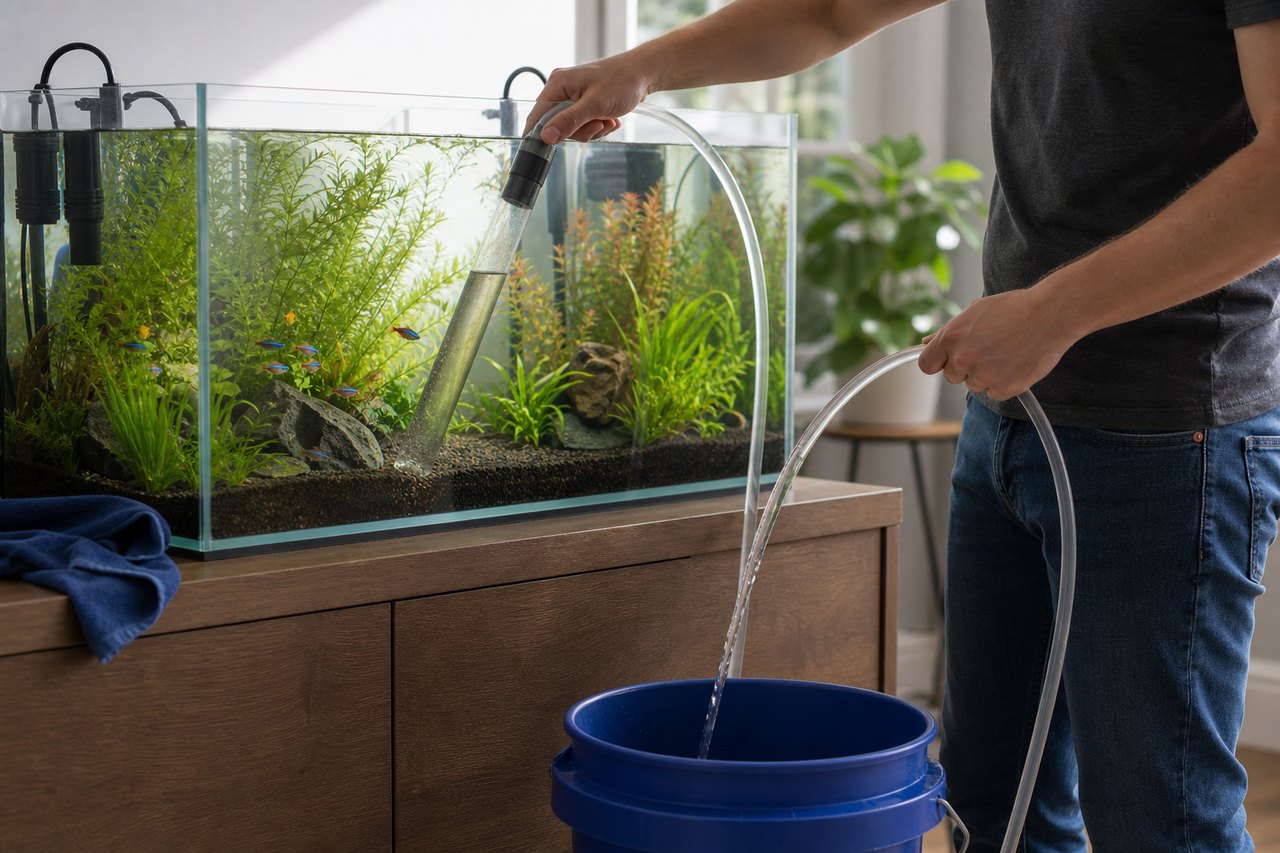
- Use a gravel vacuum (siphon) to draw water into a clean bucket while stirring the top layer of substrate. This pulls out trapped waste and food.
- Remove 20 to 30 percent of the volume. Mark your bucket so you know the amount.
- Wipe the inside of the glass with an algae pad if needed, and trim any dead plant leaves.
- Prepare fresh water, add dechlorinator, and match the temperature.
- Pour the new water in gently, aiming at a rock or the glass so you do not disturb the substrate.
- Plug the heater and filter back in.
The Monthly and Occasional Tasks
Not everything happens weekly. Spreading out the bigger jobs keeps them manageable:
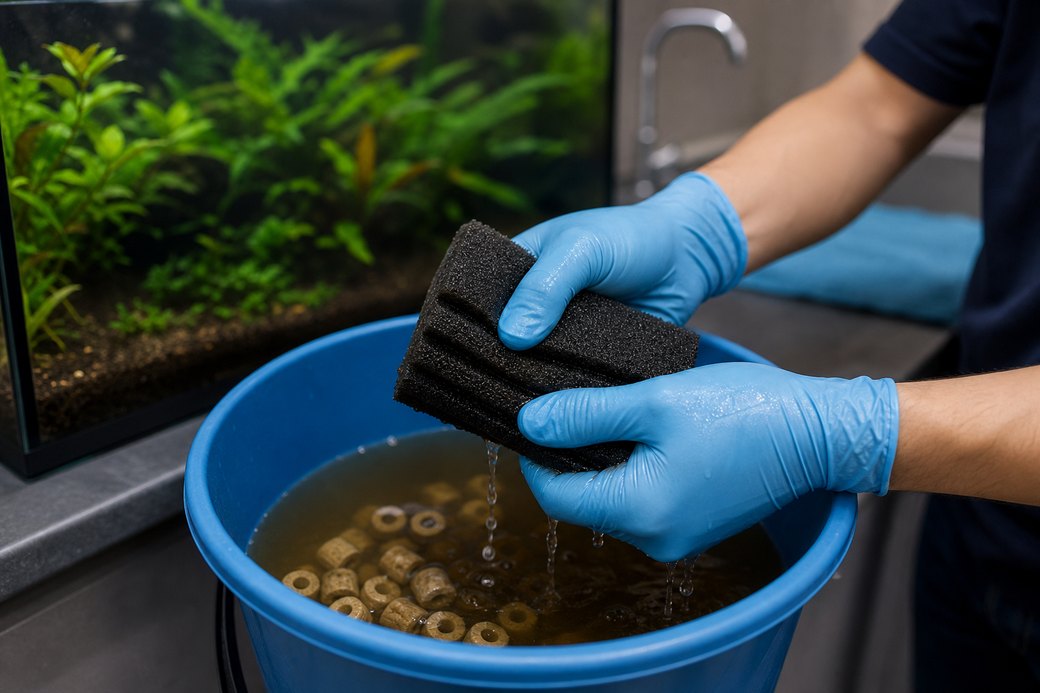
- Rinse the filter media monthly, but only in old tank water you just removed, never under the tap. Chlorine and hot water destroy the bacterial colony. Swish the sponge gently to clear debris and put it straight back.
- Test your water at least every two weeks, and always after any change in stock, feeding, or unusual fish behaviour.
- Check equipment: confirm the heater holds the right temperature and the filter flow has not weakened.
- Replace filter cartridges sparingly. Disposable cartridges throw away your bacteria; where possible use permanent sponges and ceramic media instead.
Reading the Signs
Your fish and plants tell you a great deal. Fish gasping at the surface, clamped fins, or sudden algae blooms often point to water quality slipping. Cloudy water in a new tank is usually a harmless bacterial bloom, but persistent cloudiness or a strong smell means it is time to test and change water. When in doubt, a partial water change rarely does harm and often helps.
Building the Habit
The secret to a healthy aquarium is not expensive gear; it is consistency. A small change every week beats a big rescue mission once a month. Pick a fixed day, keep your bucket, siphon, and conditioner together, and the routine becomes second nature.
If you would like a gentle nudge and a place to log your test results and change dates, the AquaTender app can schedule your water changes and keep a simple history of your parameters, so you can spot trends before they become problems.
Stick with the basics, watch your numbers, and your fish will reward you with bright colours and active, healthy behaviour for years to come.