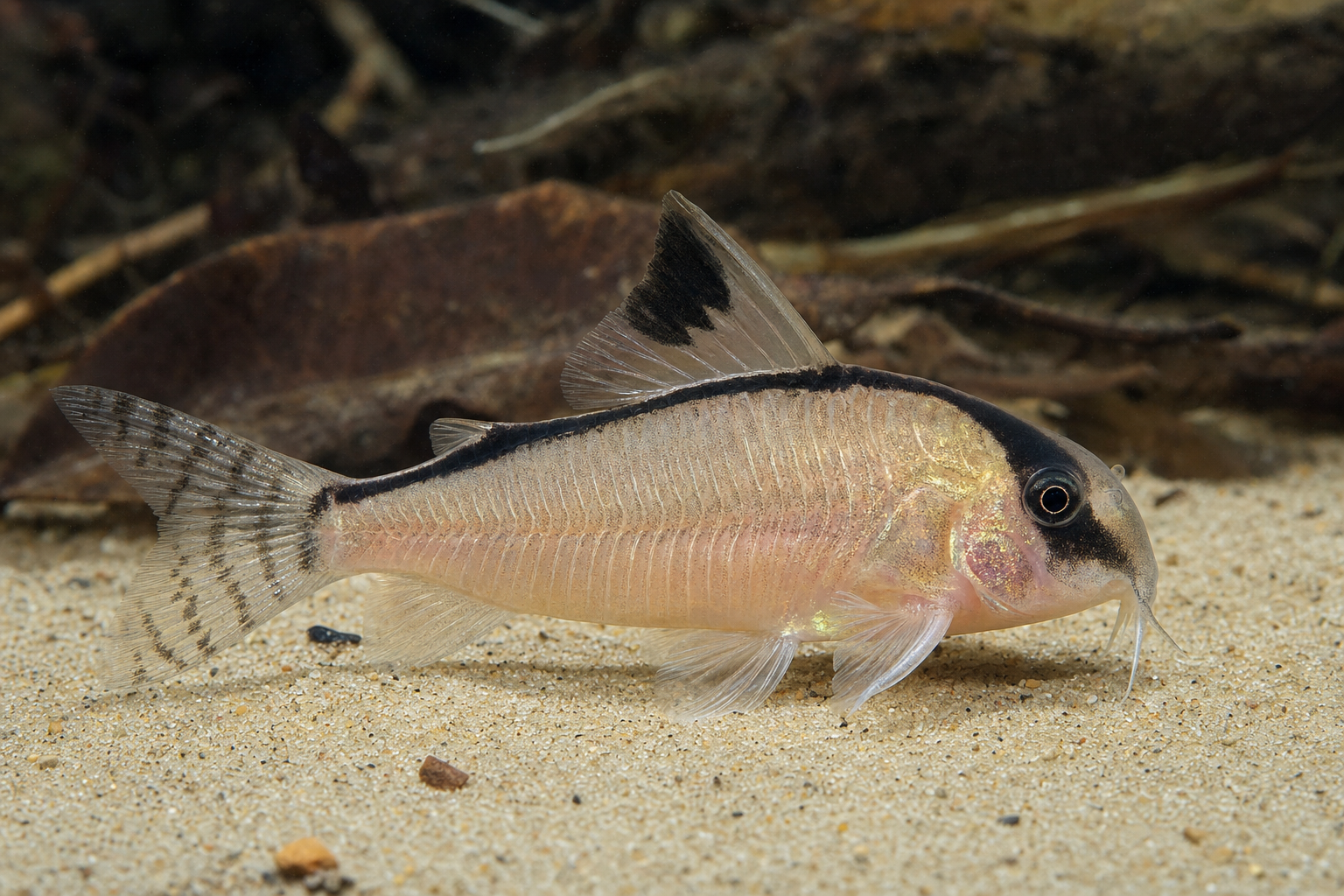
Sultan pleco (L264)
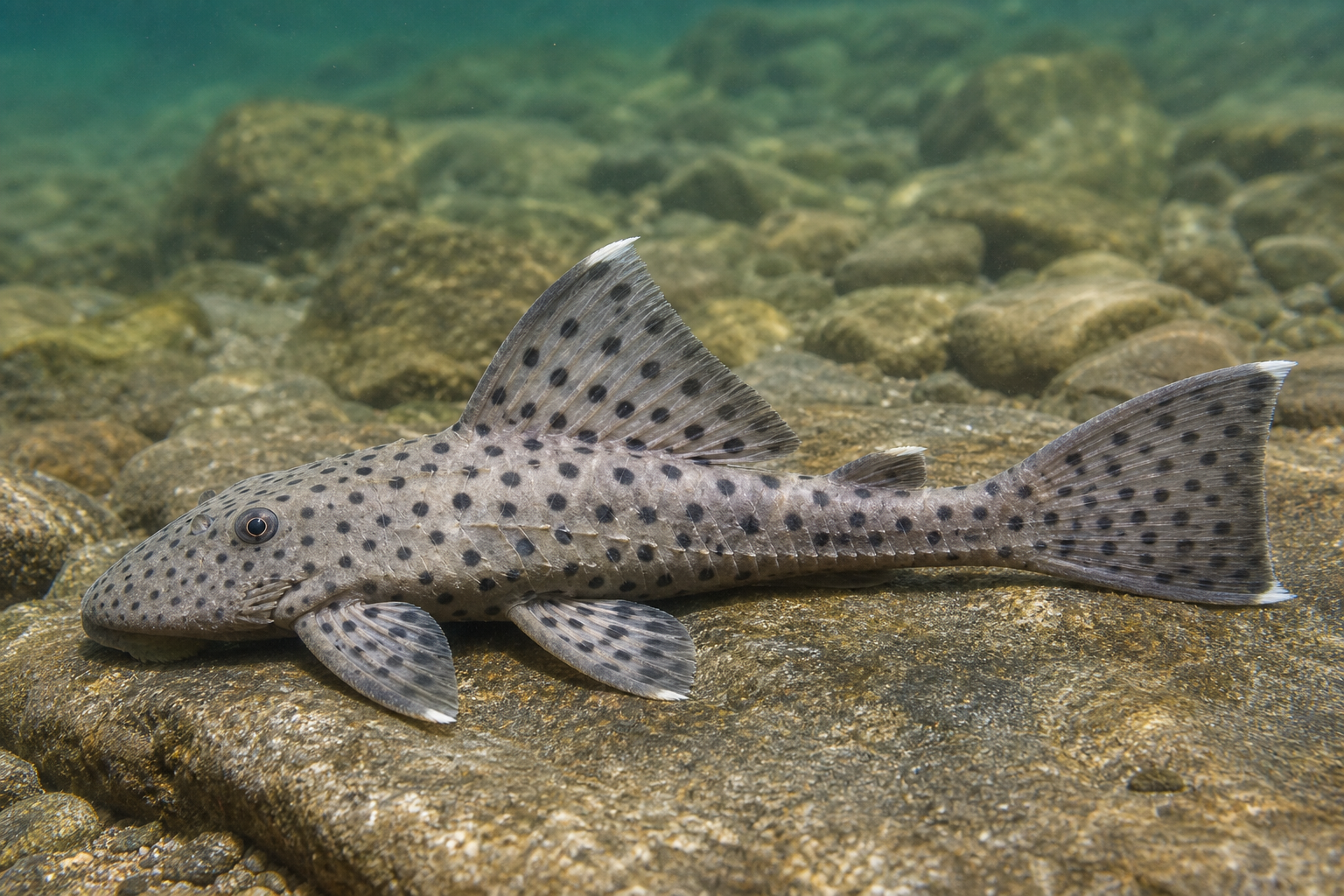
The sultan pleco (L264) is an elegant loricariid from the clear, warm waters of the Rio Tapajós in Brazil. Its dark base colour is covered in fine white to cream spots that fade slightly with age, and like its relatives in the genus it carries enlarged teeth suited to a predatory diet. It is predominantly carnivorous, thriving on frozen bloodworm, brine shrimp, mussel, prawn and quality sinking carnivore foods, with only occasional grazing. Warm, soft, slightly acidic and well-oxygenated water with brisk flow mimics its natural habitat. Provide caves, rockwork and driftwood as retreats since it is nocturnal and can defend its chosen shelter against other bottom fish. Keep singly or give each specimen its own territory. Sensitive to poor water quality, it rewards diligent maintenance and strong filtration.
Water parameters
| Temperature | 26 – 30 °C |
|---|---|
| pH | 6 – 7.2 |
| Carbonate hardness (KH) | 1 – 6 °dKH |
| General hardness (GH) | 2 – 10 °dGH |
Tank & stocking
| Minimum tank volume | 160 L |
|---|---|
| Volume budget per individual | 60 L — adds up with tank-mates |
“Minimum tank volume” is a reasonable floor, not an absolute limit. The per-individual budget is used by the Aqua app to estimate how heavily a tank is stocked.
Frequently asked questions
What size aquarium does Sultan pleco (L264) need?
Provide at least 160 litres to keep Sultan pleco (L264) in good conditions.
What water parameters does Sultan pleco (L264) need?
A temperature of 26–30 °C, pH 6–7.2.
Is Sultan pleco (L264) peaceful or aggressive?
Its temperament is semi-aggressive.
What does Sultan pleco (L264) eat?
Its diet: carnivore.
How big does Sultan pleco (L264) get?
Around 18 cm as an adult.
Is Sultan pleco (L264) suitable for beginners?
Care level: intermediate.
Planning a tank with Sultan pleco (L264)?
AquaTender turns these parameters into live advice: it checks whether your tank is big enough, how heavily it's stocked, and whether your fish are compatible — then tracks water tests, photos and maintenance for you.
Fish from the same biotope
Report an error on this page
Care data is community-assisted. Spotted something wrong? Let us know — it won't change the page instantly, but it goes to moderation.
Care data is generated and manually reviewed; always cross-check before major decisions. ← Back to the encyclopedia