Spotted scat
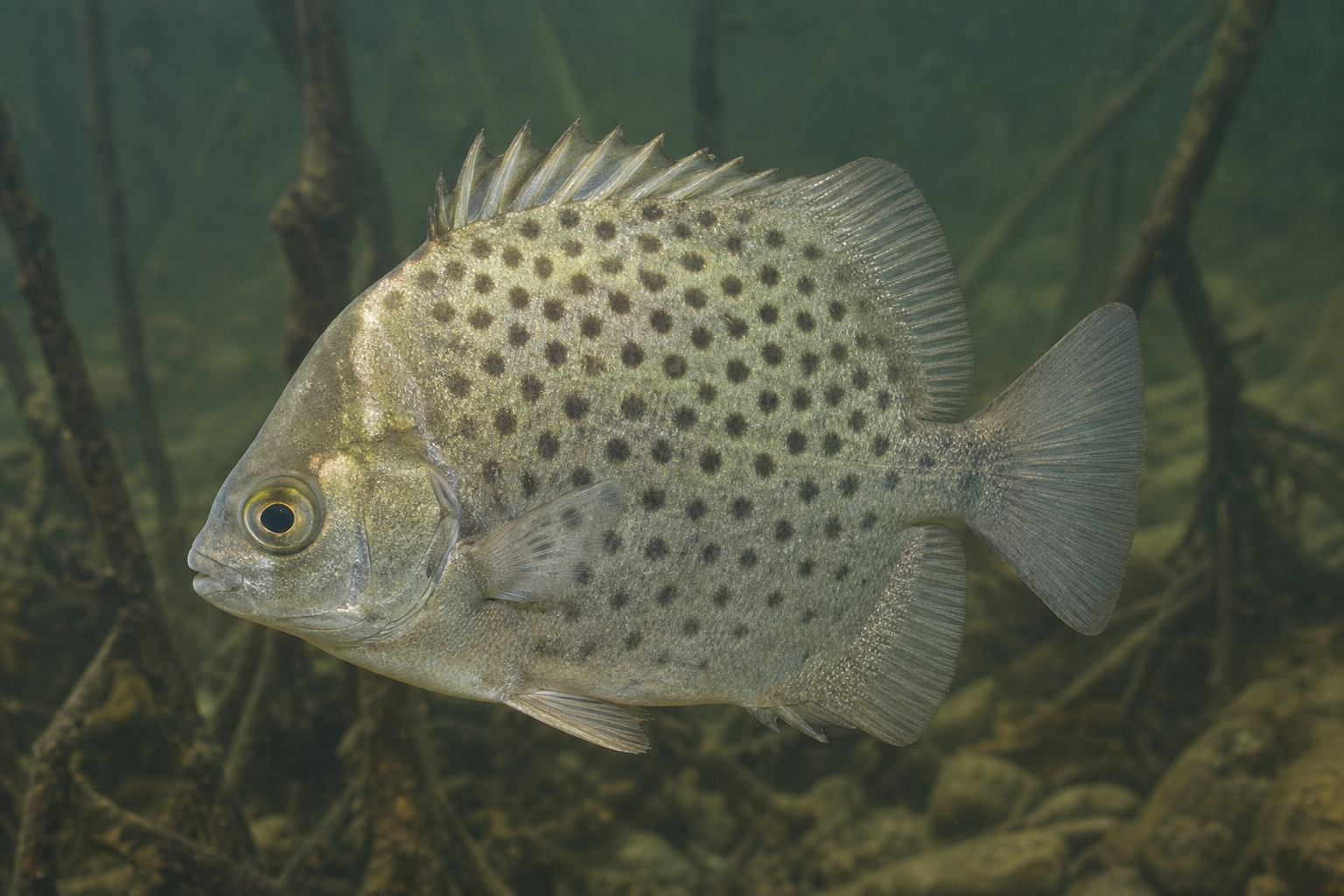
The spotted scat is a hardy euryhaline fish in the family Scatophagidae, native to coastal and estuarine waters of the Indo-Pacific. It has a deep, disc-shaped, laterally compressed body, silvery to greenish with numerous dark spots, and sharp dorsal spines. Juveniles inhabit brackish estuaries while adults move toward marine waters. It is a generally peaceful but active and boisterous schooling fish, best kept in groups and with similarly sized tankmates. A large aquarium with brackish water is strongly recommended, with salinity increased as the fish matures. It is an omnivore with a strong appetite for plant matter and will readily graze aquarium plants and algae, alongside prepared foods, vegetables, and meaty items. Its adult size and need for brackish or marine conditions make it unsuitable for a standard freshwater community tank.
Water parameters
| Temperature | 20 – 28 °C |
|---|---|
| pH | 7.5 – 8.5 |
| Carbonate hardness (KH) | 8 – 15 °dKH |
| Salinity | 15 – 35 SG |
Tank & stocking
| Minimum tank volume | 600 L |
|---|---|
| Volume budget per individual | 60 L — adds up with tank-mates |
| Minimum group size | 6 individuals (shoaling) |
“Minimum tank volume” is a reasonable floor, not an absolute limit. The per-individual budget is used by the Aqua app to estimate how heavily a tank is stocked.
Frequently asked questions
What size aquarium does Spotted scat need?
Provide at least 600 litres for a small group to keep Spotted scat in good conditions.
What water parameters does Spotted scat need?
A temperature of 20–28 °C, pH 7.5–8.5, saltwater.
Is Spotted scat peaceful or aggressive?
Its temperament is peaceful.
What does Spotted scat eat?
Its diet: omnivore.
How many Spotted scat should be kept together?
It is a social species: keep a group of at least 6.
How big does Spotted scat get?
Around 30 cm as an adult.
Is Spotted scat suitable for beginners?
Care level: intermediate.
Planning a tank with Spotted scat?
AquaTender turns these parameters into live advice: it checks whether your tank is big enough, how heavily it's stocked, and whether your fish are compatible — then tracks water tests, photos and maintenance for you.
Fish from the same biotope
Report an error on this page
Care data is community-assisted. Spotted something wrong? Let us know — it won't change the page instantly, but it goes to moderation.
Care data is generated and manually reviewed; always cross-check before major decisions. ← Back to the encyclopedia